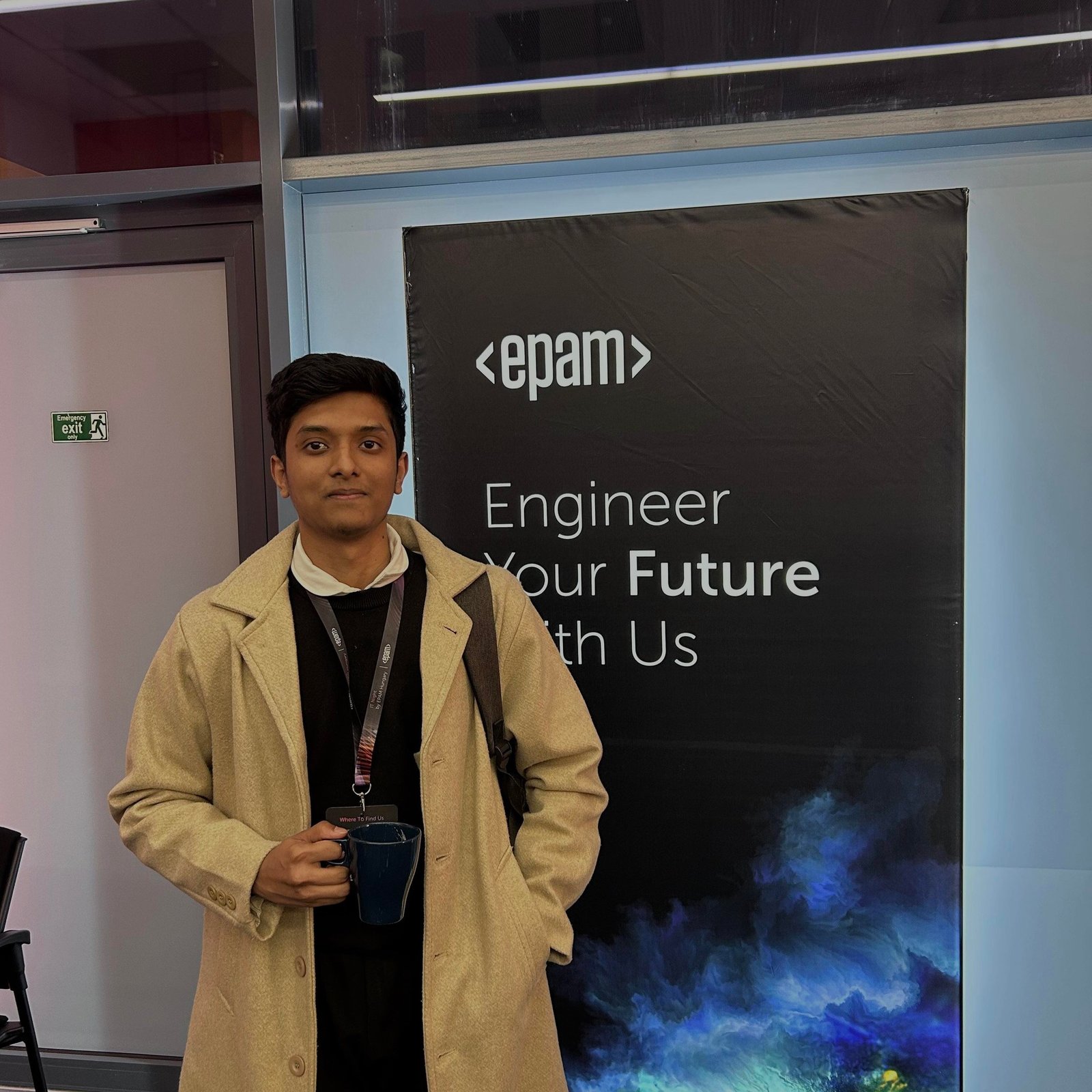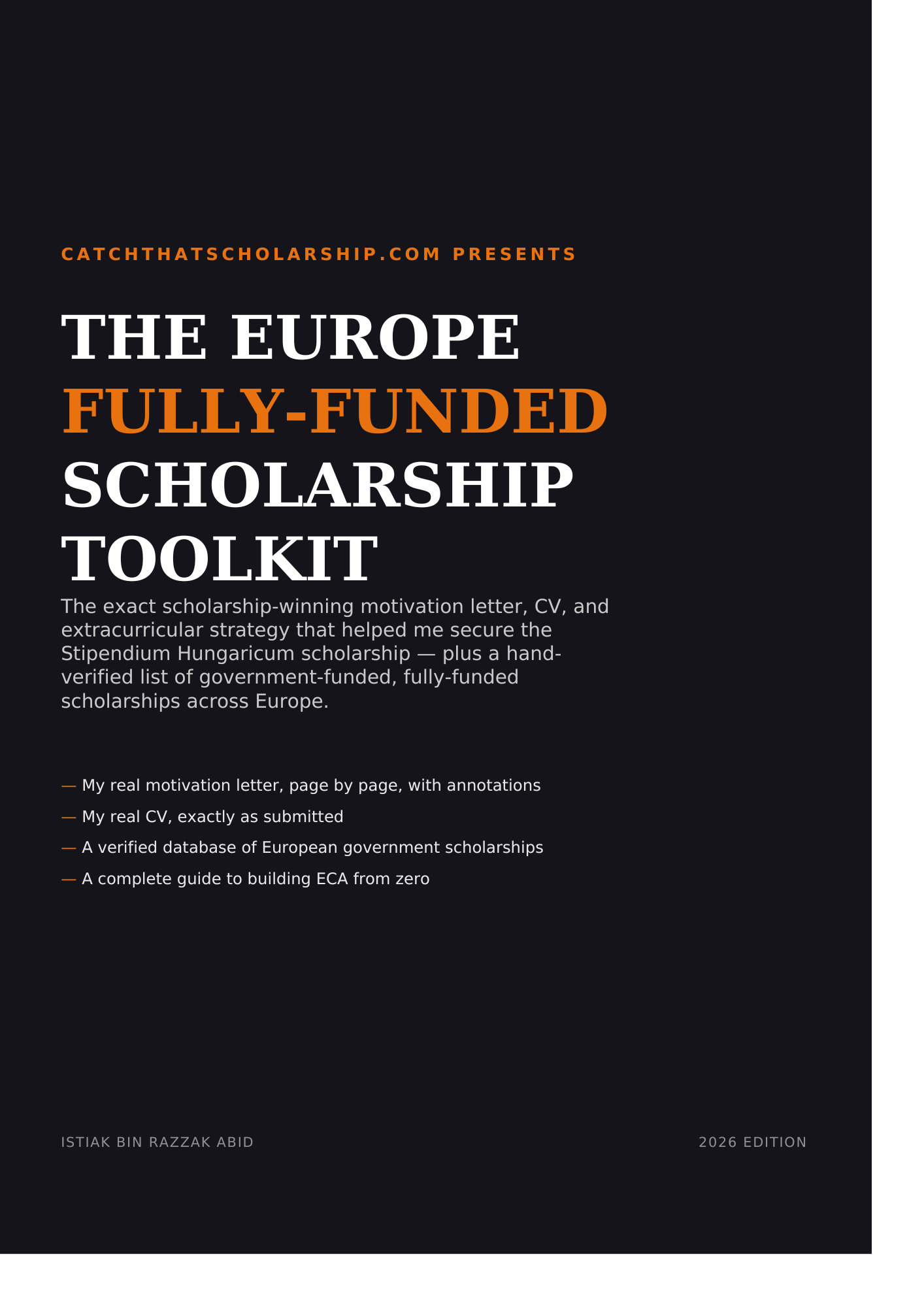

When I first heard about the Stipendium Hungaricum Scholarship, I never imagined I would actually receive it.
Like many students from developing countries, I thought studying abroad was something only wealthy families could afford. Today, I'm studying Computer Science at the University of Debrecen in Hungary on a fully funded Stipendium Hungaricum Scholarship, and looking back, I realize my journey was very different from what most people imagine.
The interesting part? I didn't have perfect A Level grades. In fact, I received B grades in my final A Levels, yet I was still selected.
In this guide, I'll explain exactly how the scholarship works, the three selection stages, my own admission experience, the mistakes I made, and practical tips I wish someone had told me before applying.
Whether you're applying from Bangladesh, Nigeria, Pakistan, Indonesia, or any other eligible country, this article will help you understand what really matters.
Useful Resources
- Scholarship Database: catchthatscholarship.com/scholarships/
- Free SOP Writer: catchthatscholarship.com/sop-outliner/
- Affordable Universities in Europe: catchthatscholarship.com/university-finder/
Can You Win the Stipendium Hungaricum Scholarship With Average A Level Grades?
This is probably the question I receive most often. The answer is yes — but your grades are only one part of your application. Here's my story.
My Original Plan Was Never to Study Abroad
After finishing my IGCSE, I had already planned my future. I was going to study at United International University (UIU) in Dhaka because they offered generous scholarships to students with good A Level grades.
At that time, my family's financial situation simply didn't allow us to think about studying abroad. Even looking at universities in Europe felt unrealistic because of the tuition fees.
Fortunately, my IGCSE results were strong. I achieved 7 A* grades and 1 A. These grades gave me confidence that I could earn a scholarship somewhere inside Bangladesh. Studying abroad wasn't even on my mind.
My AS Level Results Changed Everything
Things changed after my AS Levels. I performed extremely well — Physics: 300/300 UMS, Chemistry: 290/300 UMS.
If you're unfamiliar with UMS (Uniform Mark Scale) used by Edexcel, it converts raw marks into standardized marks. For example, if a paper is marked out of 80, scoring around 64/80 could still become 120/120 UMS depending on the exam boundary. So while my raw marks weren't perfect, my UMS scores showed excellent performance.
These results made my family believe studying abroad might actually be possible. Then reality hit — I started checking tuition fees. Many universities required tens of thousands of dollars. For us, that simply wasn't affordable.
That's when I discovered the Stipendium Hungaricum Scholarship. To be honest, I applied almost like buying a lottery ticket. I didn't expect to win this scholarship at all.
What Is the Stipendium Hungaricum Scholarship?
The Stipendium Hungaricum Scholarship is the Hungarian Government's flagship international scholarship programme. It covers almost every major expense for international students, including:
- Full tuition fee waiver
- Monthly stipend
- Accommodation support or housing allowance
- Medical insurance
- Access to Hungarian public universities
Official website: stipendiumhungaricum.hu
Official application portal: apply.stipendiumhungaricum.hu
Every year, thousands of students from partner countries apply for Bachelor's, Master's, PhD, and selected preparatory programmes.
How I Got Accepted Even Though My Final A Level Grades Were Worse
This surprises many people. My final A Level grades were actually worse than my AS results.
Why? After AS Levels, I started teaching private tuition across different parts of Dhaka. My family needed the income, so I spent a lot of time travelling between students instead of studying. As a result, my A Level performance dropped.
Fortunately, I had already applied to Stipendium Hungaricum using my AS Level results. Instead of directly admitting me into the Bachelor's programme, I was offered a Foundation Year.
Many applicants don't know this exists — you cannot directly apply for the Foundation Programme under Stipendium Hungaricum. Universities may recommend foundation admission if they believe you have strong potential but need an additional year of academic preparation before beginning your Bachelor's degree.
That one decision completely changed my future. Today, my scholarship covers my studies from the Foundation Year through my Bachelor's in Computer Science. I'm currently in my second year of Computer Science.
If I hadn't applied "just to try," I probably wouldn't be studying in Europe today. Sometimes one application can completely change your life.
How Does the Stipendium Hungaricum Selection Process Work?
One of the biggest misconceptions is that students think there's only one application. In reality, there are three separate selection stages. Understanding these stages is extremely important because many students fail before they even reach the university admission test.
Stage 1: How Does Your Country Nominate You for Stipendium Hungaricum?
Before Hungarian universities even look at your application, many countries first conduct their own selection process. This process is completely different depending on where you're applying from.
Bangladesh
When I applied, applicants had to:
- Meet minimum GPA requirements
- Submit academic certificates
- Provide English language proof (IELTS usually strengthens an application)
- Submit documents to the designated government office
- Complete additional country-specific requirements
Applicants also needed documents such as a Police Clearance Certificate during the national nomination process.
Pakistan
Pakistan follows a different system. Applicants are generally required to sit for the USAT examination, and the nomination process differs significantly from Bangladesh.
Other Countries
Nigeria. Indonesia. Egypt. India. Azerbaijan. Every country has its own rules. This is why you should never rely solely on YouTube videos from another country — always check your own country's official requirements.
The easiest way is:
- Visit the official Stipendium Hungaricum website.
- Open the Partner Countries section.
- Select your country.
- Visit the official nominating authority's website.
If the government website is confusing (which honestly happens quite often), search YouTube using terms like "Stipendium Hungaricum process Nigeria" or "Stipendium Hungaricum Bangladesh." Usually, previous scholarship winners explain the process in your own country's context.
Stage 2: What Happens in the University Admission Test?
Once your country nominates you, Hungarian universities begin evaluating applicants. During your application, you'll choose two study programme preferences. These can be:
- Two different programmes at the same university.
- The same programme at two different universities.
- Two completely different universities.
Each university then evaluates your application exactly like they evaluate fee-paying international students. They don't create an easier admission test just because you're a scholarship applicant.
In my case, I applied to Computer Science and Business Informatics, both at the University of Debrecen. Instead of two completely separate examinations, I had one written mathematics test followed by an online interview. The written test required around 56% to pass. Fortunately, I passed.
A few days later, I attended the interview. Honestly, it was much easier than I expected. The interviewer asked me to solve a quadratic equation — I explained the method I would use, and while I explained, he solved it himself. Then he showed me the equation of a circle and asked me to identify it. That was essentially the interview.
My biggest advice is not to panic. University admission interviews are usually designed to understand your thinking process rather than trick you.
Another useful tip: many Hungarian universities publish previous admission papers or sample entrance exams on their websites. Practising those papers gives you a very good idea of what to expect.
Stage 3: How Does Tempus Foundation Make the Final Selection?
After you complete your university admission test, many students think they've already secured the scholarship. Unfortunately, that's not how it works. Passing the university admission test does not automatically guarantee the scholarship.
Once universities finish evaluating applicants, they send the results to the Tempus Public Foundation, the organization responsible for managing the Stipendium Hungaricum Programme. Tempus then reviews all nominated applicants and makes the final selection based on factors such as:
- The number of scholarship seats available
- Your university admission results
- Your complete application profile
- The nomination received from your country's sending partner
- Other programme-specific considerations
This is why some students pass the university entrance examination but still do not receive the scholarship. Competition can be intense, especially for popular programmes.
My Advice
One thing I noticed during my application year was that some programmes were much more competitive than others. For example, programmes like Medicine, Dentistry and Pilot Training receive a huge number of applicants every year.
If your main goal is to study in Hungary with a scholarship rather than attend one specific programme, consider applying to programmes and universities that receive fewer applications. Of course, don't choose something you have no interest in just because it may be less competitive — choose a programme you genuinely want to study while also being realistic about competition.
Another thing many applicants overlook is their overall profile. Many students will pass the admission exam. Not everyone will have strong extracurricular activities, volunteer experience, leadership roles, competition certificates, and a well-written motivation letter. These are the areas where you can stand out.
How to Apply for the Stipendium Hungaricum Scholarship Step by Step
If you're confused by the entire application process, here's the exact order in which things usually happen.
- Create an account on the official application portal at apply.stipendiumhungaricum.hu. Complete your online application and upload all required documents.
- Check whether your country requires a separate national application. Some countries only require the online application; others require additional forms. When I applied from Bangladesh, I also had to apply through the government's designated authority.
- Submit physical documents if your country's nominating organization requires them. This depends entirely on your country.
- Wait for your country's nomination decision. Only nominated students proceed to university evaluation.
- Watch your email carefully. Universities will contact shortlisted applicants with details about admission tests and interviews. Missing an email could mean missing your scholarship opportunity.
- Take your university admission examination. Some universities require written tests, online exams, or oral interviews — others may only require one of these.
- Attend the interview, if required. Not every university conducts interviews, but many do.
- Receive your university admission result. Passing this stage means the university has recommended you.
- Wait for the final decision from Tempus Foundation. This is the stage where scholarship offers are officially announced.
When Does the Stipendium Hungaricum Application Open?
Although applicants should always check the official website for updates, the timeline is generally as follows:
| Activity | Typical Date |
|---|---|
| Applications Open | Early November |
| Application Deadline | Around 15 January |
| University Admission Tests | February – May |
| Final Results | June |
| Visa Process | June – August |
| Arrival in Hungary | August – September |
Always verify the latest dates on the official website because deadlines may change.
What Documents Are Required for Stipendium Hungaricum?
Preparing your documents early can save you a lot of stress later. Most Bachelor's applicants will typically need:
- Passport
- Secondary School Certificates
- Academic Transcripts
- Curriculum Vitae (CV)
- Motivation Letter
- Language Proficiency Certificate (IELTS, TOEFL, Medium of Instruction, or another accepted proof depending on the programme)
- Medical Certificate (this may be submitted later depending on the application rules and country requirements)
For PhD applicants, additional documents usually include a Recommendation Letter and a Research Proposal. Applicants in arts and music programmes may also need a Portfolio, proof of artistic work, and audition materials.
Always check your programme's requirements, since universities may request additional documents.
What Country-Specific Documents Might You Need?
Besides the standard scholarship documents, your country's nominating authority may request additional paperwork. When I applied from Bangladesh, we also needed a Police Clearance Certificate during the nomination process.
Other countries may request completely different documents. That's why it's so important to check your country's official requirements instead of relying on someone else's application experience.
How to Write a Strong Stipendium Hungaricum Motivation Letter
If there's one document that deserves your attention, it's your motivation letter. I honestly believe many applicants spend weeks preparing for admission tests but write their motivation letter in just one evening. That's a mistake.
Your motivation letter should answer questions like:
- Why this programme?
- Why this university?
- Why Hungary?
- What are your future career goals?
- How will this scholarship help your country?
Don't write generic sentences that could be copied into any scholarship application. Make it personal. Tell your story. Explain your goals. Show that you've researched the university.
If you need help structuring your essay, you can use Catch That Scholarship's free SOP Writer.
My Biggest Mistake During the Application
Looking back, the most important thing I wish I had known is this: I thought scholarships were impossible to get. Now that I'm already a scholarship holder, I realize that winning scholarships is really about building a good profile and applying to as many scholarships as you can — and you'll almost certainly land at least one.
There are many scholarships around the world. Focus on your grades and try to score as much as you can. Start extracurricular activities early and build real skills. Write a motivation letter that makes the admission committee understand why they should give you the scholarship — what you would bring to the university: your leadership, your community-service mindset, your academic excellence.
Then just apply, apply, and apply. That's it. It's that simple.
Frequently Asked Questions About the Stipendium Hungaricum Scholarship
Is IELTS compulsory?
Not always. Some universities accept other forms of English language proof such as a Medium of Instruction certificate, while others specifically require IELTS or TOEFL. Always check your chosen programme's admission requirements.
Can I apply before finishing A Levels?
Yes. I applied using my AS Level results and was later offered a Foundation Year before beginning my Bachelor's programme. Universities evaluate applicants individually.
Is the admission test difficult?
In my experience, no. If you've studied your subjects properly and practise previous admission papers, you should be well prepared. The interview was much more relaxed than I expected.
Can I choose two universities?
Yes. During your application, you can select two programme preferences according to the programme rules for that application year. Always read the official application guide before submitting.
Final Advice From Someone Who Was Once in Your Position
If you're reading this, you're probably exactly where I was a few years ago. Searching through YouTube. Reading blog posts. Wondering if you actually have a chance. I understand that feeling.
When I submitted my application, I genuinely thought I would be rejected. In fact, my backup plan was to study in Romania because it seemed much more affordable than most other European countries. The Stipendium Hungaricum application was simply something I decided to try.
That one decision completely changed my life. Today, I'm studying Computer Science in Hungary under a fully funded scholarship that covers my education from Foundation Year all the way through my Bachelor's degree.
Don't reject yourself before the scholarship committee does.
Apply. Prepare well. Write a strong motivation letter. Practise for the admission test. Build the strongest application you can. Then let the selection committee decide — you might be far more competitive than you think.
Helpful Resources
- Scholarship Database: catchthatscholarship.com/scholarships/
- Free SOP Writer: catchthatscholarship.com/sop-outliner/
- Affordable Universities Finder: catchthatscholarship.com/university-finder/
- Official Stipendium Hungaricum Website: stipendiumhungaricum.hu
- Official Application Portal: apply.stipendiumhungaricum.hu
Free Tools to Help With Your Application
- Scholarship Finder: catchthatscholarship.com/scholarships/
- University Finder: catchthatscholarship.com/university-finder/
- Major Matchmaker Quiz: catchthatscholarship.com/major-matchmaker-quiz/
- SOP Outliner: catchthatscholarship.com/sop-outliner/
- CV Builder: catchthatscholarship.com/cv-builder/
- Routine Maker: catchthatscholarship.com/routine-maker/
I wish you the very best of luck with your application. Hopefully, a few years from now, you'll be writing your own success story too.