Most guides to this scholarship read like a copy of the official press release. This one focuses on the part that actually trips people up: Azerbaijan doesn't accept applications from students directly. Your own government nominates you first — and that single detail is where most applicants either win or lose their shot.
Below: what the grant actually pays for, who from the 152 eligible countries can apply, exactly how the two-stage nomination works, and the specific documentation mistakes that get otherwise strong applicants rejected before they ever reach Azerbaijan's Ministry.
Before You Start
- Draft your motivation letter: catchthatscholarship.com/sop-outliner/
- Build your CV: catchthatscholarship.com/cv-builder/
- Official platform: portal.edu.az (SIACAS)
What Is the Heydar Aliyev International Education Grant?
The Heydar Aliyev International Education Grant is Azerbaijan's flagship scholarship for international students, established by presidential decree in July 2023 and run jointly by the Ministry of Foreign Affairs and the Ministry of Science and Education. It's named after Heydar Aliyev, Azerbaijan's National Leader and President from 1993 to 2003, and it replaced and expanded what used to be called the Azerbaijan Government Scholarship.
The programme funds 100 places a year for five years, starting with the 2026–2027 academic year — a meaningful commitment for a country with a relatively small international scholarship footprint. What makes it different from most government scholarships you'll have researched is the nomination model: you don't submit anything to Azerbaijan yourself. Your home country's education authority does that on your behalf, and only students it selects ever reach the Azerbaijani side of the process.
The biggest factor in whether you get this scholarship isn't your GPA — it's whether you found and contacted your country's nominating authority early enough.
| Detail | Information |
|---|---|
| Host country | Azerbaijan |
| Run by | Ministry of Foreign Affairs & Ministry of Science and Education |
| Eligible nationalities | 152 countries (OIC, Non-Aligned Movement, SIDS, and countries with historical ties to Azerbaijan) |
| Degree levels | Preparatory language course, Bachelor's, Master's, General Medicine, Medical Residency, PhD |
| Application route | Two-stage: home-country nomination, then SIACAS portal registration |
| Stage 1 deadline | April 15, 2026 (6:00 PM Baku time) |
| Stage 2 window | May 18 – June 1, 2026 |
| Awards per year | 100 |
| Minimum GPA | 70/100 or equivalent |
What the Scholarship Actually Covers
Here's every benefit, with the exact current figures.
Monthly stipend — 800 AZN (~$470 USD)
Tuition — 100% waived
Flights — one round trip a year, economy class
Health insurance — 200 AZN (~$117 USD) a year
Visa and residence permit — fully supported
Preparatory language course — fully funded
Worth budgeting around: the stipend runs for 10 months, not 12 — plan for the two summer months without a payment even though the flight benefit is still provided annually regardless.
Who Can Apply
Nationality
Open to citizens of 152 countries — largely members of the Organization of Islamic Cooperation, the Non-Aligned Movement, Small Island Developing States, and nations with historical or cultural ties to Azerbaijan. That covers most of Africa, South and Southeast Asia, Central Asia, the Middle East, Latin America, and the Pacific Islands, plus a handful of European OIC/NAM members. Azerbaijani nationals and former citizens, regardless of current nationality, are not eligible.
Age
- Bachelor's / General Medicine: under 35 as of September 15 of the application year
- Master's / Medical Residency: under 40
- PhD: under 45
Academic record
- Bachelor's: completed secondary education, minimum 70/100 GPA equivalent
- Master's: completed Bachelor's degree, minimum 70/100 GPA equivalent
- PhD: completed Master's degree, minimum 70/100 GPA equivalent, and a clear research direction
- All transcripts and diplomas must be officially authenticated and apostilled — or notarised by the Azerbaijani Embassy if your country isn't part of the Hague Convention
Language
Programmes run in Azerbaijani, Russian, English, and Turkish. For English-taught programmes you'll need IELTS 5.0 (undergraduate) or 5.5 (postgraduate), unless your previous education was already conducted in English — in which case your transcripts can substitute for a test score. If your language level isn't there yet, the funded preparatory year covers it.
Health
A medical certificate issued within 3 months of applying, explicitly confirming you're free of HIV/AIDS, Hepatitis B, and Hepatitis C, stamped by a licensed medical facility. This is non-negotiable and one of the more common reasons applications get rejected — a generic health certificate that doesn't test for these specific conditions won't be accepted.
Where You Could Study
The grant is valid at a set list of accredited Azerbaijani universities. During Stage 2 you can rank up to three specialties at different institutions. The main options:
- Baku State University — Azerbaijan's oldest and largest, founded 1919, covering humanities, science, law, and economics in Azerbaijani and Russian.
- ADA University — English-language, internationally accredited, strong in diplomacy, public policy, IT, and business.
- Azerbaijan State Oil and Industry University — the country's leading technical school for petroleum engineering and applied sciences.
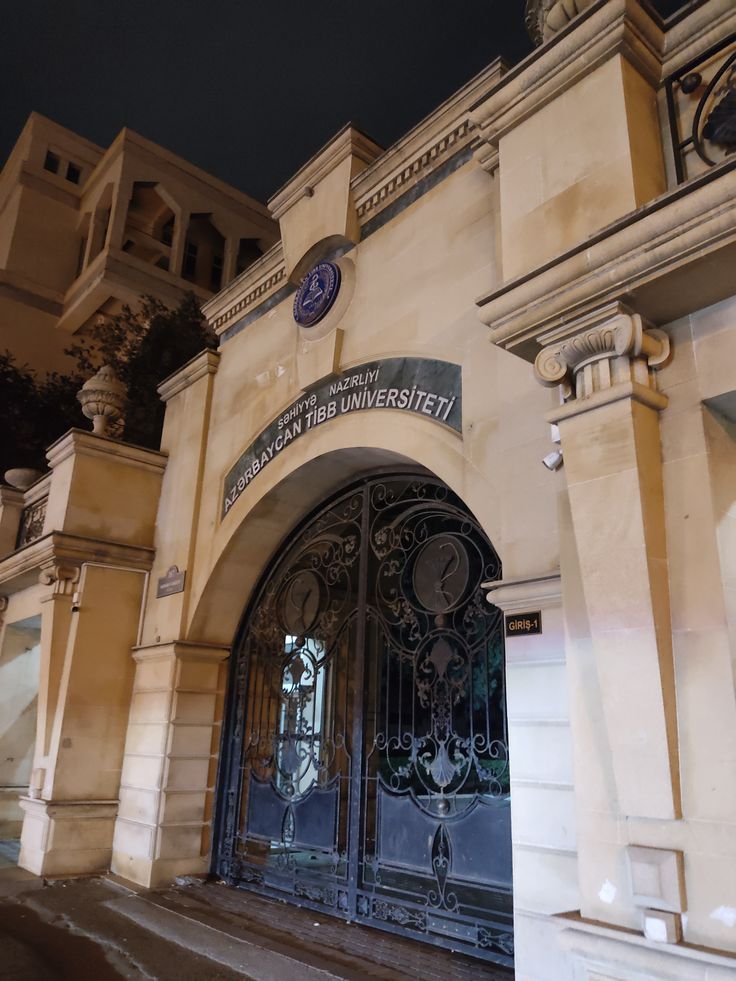
- Azerbaijan Medical University — General Medicine, Dentistry, and Pharmacy in Azerbaijani, Russian, and English.
- Azerbaijan State University of Economics (UNEC) — finance, accounting, management, international economic relations.
- Khazar University — private, English-medium, strong across humanities, engineering, and social sciences.
- National Aviation Academy — a niche option for aeronautical engineering and air traffic management.
- Azerbaijan State Agricultural University — based in Ganja, covering agronomy and veterinary science, with typically lower competition.
Roughly 435 specific programmes across these institutions are eligible — check the current list on portal.edu.az before finalising your three choices.
How the Application Actually Works
- Find your country's nominating authority (December–January). This is usually your Ministry of Education, Higher Education Commission, or the Azerbaijani Embassy. Contact them directly and ask about their internal process and deadline — it's almost always earlier than April 15.
- Shortlist your programmes (January–February). Cross-check the university list against the official 435-programme list and pick up to three specialties across different institutions.
- Prepare your documents (February–March). The medical certificate and document authentication are the two steps that take longest — start them early.
- Submit to your national authority (by April 15, 2026). This is the official Stage 1 cutoff, but treat your country's internal deadline as the real one.
- Wait for nomination (mid-April to mid-May). Only nominated candidates receive SIACAS credentials — this step is entirely out of your hands once submitted.
- Register on SIACAS (May 18 – June 1, 2026). Complete your profile at portal.edu.az, upload documents, and rank your three programme preferences.
- Await the Ministry's review (June–July). Academic merit, document completeness, and programme relevance are all assessed together.
- Get your result (July–August). Successful applicants receive an official award letter and placement confirmation.
- Apply for your visa (August–September). Your award letter and university placement support the application at your nearest Azerbaijani Embassy.
- Arrive and enrol (September–October). Your host university handles orientation, dormitory placement, and registration for your residence permit.
Where Applicants Actually Lose Their Spot
They wait until March to contact their nominating authority. National deadlines are often weeks ahead of the official April 15 date — email them in December.
Their medical certificate doesn't explicitly list HIV/AIDS, Hepatitis B, and Hepatitis C. A general fitness certificate isn't the same document — ask your clinic to name these conditions specifically.
Documents aren't apostilled or embassy-notarised. This is one of the most avoidable rejection reasons, and one of the most common.
Their motivation letter could be copy-pasted into any country's scholarship form. Be specific about why Azerbaijan and why that particular programme.
They only rank one programme instead of using all three preferences — spreading across a well-known university and a less competitive one (like the Agricultural University in Ganja) genuinely improves your odds.
Once You're Awarded the Grant
- You'll be placed at one of your three chosen universities, based on availability — your first choice isn't guaranteed if that programme fills up.
- Most host universities offer on-campus dormitories; contact the international office immediately after placement, since spaces fill fast for the September intake.
- Your stipend is paid into an Azerbaijani bank account, typically opened during orientation week with help from your university.
- You must register with the State Migration Service within 15 days of arrival to get your residence permit — your university will guide you through this.
- Scholarship continuation depends on satisfactory academic progress each semester; talk to your faculty adviser early if you're struggling.
If You're Not Sure This One Fits
Worth keeping in your back pocket while you wait on your nomination — these run on similar government-scholarship models but with different eligible countries and timelines:
Comparable Government Scholarships
- Stipendium Hungaricum (Hungary) — full guide
- Türkiye Bursları (Turkey) — full guide
- MAECI Government Scholarship (Italy) — full guide
- Holland Scholarship (Netherlands) — full guide
Frequently Asked Questions
What's the monthly stipend?
800 AZN (roughly 470 USD), paid for 10 months of each academic year to cover accommodation, food, and daily costs.
How do I actually apply?
You don't apply to Azerbaijan directly. Your home country's Ministry of Education, Higher Education Commission, or the Azerbaijani Embassy nominates you first. Only nominated candidates then register on the SIACAS portal.
Which countries are eligible?
152 countries — mainly OIC, Non-Aligned Movement, and Small Island Developing States members, plus nations with historical ties to Azerbaijan. Azerbaijani nationals and former citizens can't apply.
Is it genuinely fully funded?
Yes — full tuition, an 800 AZN monthly stipend for 10 months a year, an annual round-trip flight to Baku, health insurance, and visa/residence permit support.
Your Actual First Step
Don't start with SIACAS. Start by emailing your country's Ministry of Education or your local Azerbaijani Embassy and asking for their internal nomination timeline. Everything else on this page only matters once you've secured that nomination.
Keep Going
- Official platform: portal.edu.az
- Free SOP Writer: catchthatscholarship.com/sop-outliner/
- Browse every scholarship in the database: catchthatscholarship.com/scholarships/